

How Eritrean Diaspora Is Building a
Transnational Cooperative With Malawi at its Heart
Our member, Philipos, introduces his recently launched initiative in Malawi. This may seem very far reaching for followers of Braided Bridge. It is! Take in what Philipos is sharing now, and we’ll be explaining and sharing more, along with our other work, in upcoming posts. There is room in Braided Bridge for people to work in community, creativity, and justice in many parts of the world and from many perspectives. To begin describing Meadi Cooperative, Philipos writes:
In an era marked by tightening global immigration policies in the United States and Europe, many diaspora communities are being forced to rethink not only where they live, but how they belong. For the Eritrean diaspora, this question carries an added weight. Decades of totalitarian rule have made return impossible for many, leaving a generation suspended between exile and responsibility.
Out of this condition, a new experiment is taking shape.
In November 2025, Meadi Cooperative, Inc. was formally incorporated in the State of California as a democratically governed consumer cooperative. Headquartered in the U.S., Meadi Coop is designed as a transnational cooperative platform—linking Eritrean diaspora communities with partners in Malawi, and a greenhouse pilot laboratory in Canada, to build sustainable, ethical, and community-owned agricultural systems.
Why Malawi?
Unable to return to Eritrea, Eritrean diaspora organizers [including Philipos] began looking south—to countries with democratic governance, agricultural potential, and trusted moral institutions. Malawi emerged as a natural partner. Central to this partnership is collaboration with the Catholic Church in Malawi, particularly the Catholic Diocese of Mangochi, which offers long-term land stewardship, institutional continuity, and community legitimacy beyond political cycles. This partnership reflects a deliberate choice: development rooted in trust, not extraction.
Three Anchors, One Cooperative Vision
Meadi Coop’s structure integrates three interconnected operations:
- Malawi – Community Agriculture & Food Security
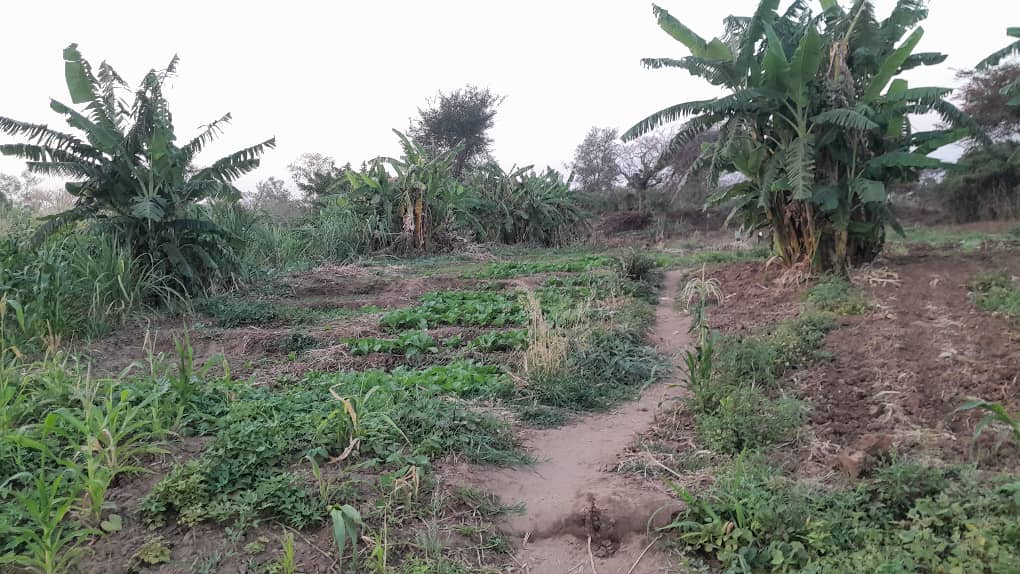
In partnership with the Catholic Diocese of Mangochi and the Capuchin Sisters, Meadi Coop is preparing long-term agricultural projects focused on food security, employment, and cooperative ownership. - Malawi – Land Partnership with Fr. Raphael Mkuzi
Through land access facilitated by Fr. Dr. Raphael Dickson Mkuzi, a theologian trained at Berkeley Theological Union, the cooperative grounds its work in both physical land and ethical clarity. This partnership reflects a covenantal approach rather than transactional development. (Philipos explains that “covenant” in his native Tigrinian language, is “kidan” which means clothing. It means you are covered, cared for, protected in an interconnected way. I cannot survive without you and you can’t survive without me.) - Canada – Greenhouse Pilot Lab (Alberta)
In Sturgeon County, Edmonton, Alberta, Meadi Coop is launching a greenhouse agriculture pilot lab, using land purchased by a Meadi Cooperative organizer who is likewise part of the Eritrean diaspora. Lessons learned in Canada will directly inform scaling efforts in Malawi.This controlled environment will test:- Year-round vegetable production (tomatoes, peppers, leafy greens)
- Solar-powered, water-efficient drip irrigation
- Seedling nurseries
- Cooperative management and governance models
A Cooperative, Not a Charity
Meadi Coop operates under California’s Consumer Cooperative Corporation Law, with one-member, one-vote governance, limited dividends, and surplus distribution based on participation—not capital. Community members are envisioned not as beneficiaries, but as co-owners and partners. Meadi organizers are hoping for future engagement with international cooperative networks such as the International Cooperative Alliance (ICA), Mondragón, and DGRV, in order to join Meadi Coop to the global cooperative ecosystem.
Drinking from Our Own Wells
The spiritual and intellectual inspiration behind Meadi Coop draws deeply from Gustavo Gutiérrez and his seminal 1984 work, We Drink from Our Own Wells. Fr. Raphael Mkuzi’s doctoral formation at Berkeley in liberation theology directly informs the cooperative’s ethos: authentic development flows from the lived experience, dignity, and spirituality of the people themselves. Meadi Coop embodies this insight practically—building economic structures that are spiritually grounded, locally accountable, and resilient over time.
A New Cooperative Geography
With California as its cooperative headquarters, Canada as its innovation lab, and Malawi as its community heart, Meadi Cooperative represents a new form of diaspora engagement—one that transforms exile into responsibility, and displacement into shared stewardship. This is not a return to the past. It is a forward movement—from survival to solidarity, from charity to cooperation, and from exile to shared future.